How to spot scope gaps before you carry the number
A practical review sequence for finding missing scope, duplicated cost, and unresolved trade boundaries while there is still time to price them properly.
Author
Ido Gedanken, CEOPublished

Bring a current or completed project and see how Piper saves review time, surfaces scope gaps, and applies your company's knowledge.
Book a demo- Type
- Guide
- Read
- 7 min
- Published
On this page
A scope gap is required work that no bidder and no package clearly covers. It is the cheapest problem in construction to fix on a Tuesday and one of the most expensive to fix after award, because by then the work still has to happen and you have lost every bit of leverage you had over who pays for it.
Gaps are rarely the result of anyone being careless. They come from the ordinary friction of a project: a boundary that two trades read differently, an addendum that moved a detail, a specification section that assigns work the drawings assign somewhere else. The review below is about catching them while a price adjustment is still a conversation rather than a change order.
Three problems that look the same on a leveling sheet
Teams tend to label everything unresolved as a "gap." Separating the three cases matters, because the fix is different in each one.
| Finding | What it means | The right response |
|---|---|---|
| Gap | No bidder or package clearly covers required work | Price it, assign it, or issue a clarification |
| Overlap | Two or more bidders, allowances, or packages carry the same work | Remove the duplicate before it inflates the bid |
| Interface | Both sides are covered, but they do not meet at the same boundary | Confirm the boundary in writing with both trades |
Overlaps get less attention than gaps and cost real money in the other direction. If concrete carries all embeds and steel also carries the embeds shown on the structural drawings, you are paying twice for the same anchor bolts and your number is uncompetitive for no reason.
Interfaces are the subtle one. Nothing is missing from either proposal, so a status matrix shows two green cells. The risk lives in the space between them: roofing flashes to the curb, mechanical excludes the curb, and nobody furnishes it.
Why gaps survive until bid day
Four conditions produce almost all of them.
Context is scattered. Drawings, specifications, addenda, and subcontractor quotes rarely stay aligned through bid week. The answer to "who has temporary power" may live in one place while the answer to "who pays for it" lives in another.
Review varies by reviewer. Two estimators reading the same package find different things, so the same project gets a different answer depending on who had time that day. Without a standard question set, thoroughness is a function of staffing.
The solicitation was vague. If your invitation never named the boundary, every bidder invented one. When all three electrical bidders omit temporary lighting, comparing the proposals to each other shows agreement. Comparing them to the project shows a hole. This is why gaps are best prevented in the solicitation itself.
Addenda land late. A revised detail sheet arriving two days before close means some quotes reference the old condition and some reference the new one, and the difference is invisible unless someone tracks acknowledgment per bidder.
A repeatable review sequence
Run these in order. The sequence matters, because steps 3 and 4 produce false findings if step 1 has not been done.
- Confirm every trade package maps to a scope owner. Not "electrical is covered," but every line of required electrical work has a named package carrying it. The unowned lines are your candidate gaps.
- Freeze the document basis and check acknowledgment. Drawing dates, specification revision, addenda numbers, bid form revision. Then verify which addenda each bidder actually acknowledged, one bidder at a time.
- Read the boundaries, not the middles. Nobody forgets to price the roof membrane. They forget the walkway pads, the curbs, the sheet metal transition, and who protects the finished surface.
- Compare quotes for exclusions that move risk to the GC. An exclusion is a legitimate scope decision when it is priced somewhere else and an unfunded liability when it is not.
- Flag duplicated cost before it inflates the bid. Search for the same work in two proposals, in a proposal and an allowance, or in a proposal and your own general conditions.
- Decide what to price and what to ask. Not every open item deserves a clarification two days before close. Prioritize the ones that can change the carry, the schedule, or the award.
Where gaps actually hide
The list below is a prompt sheet, not a substitute for project-specific review. Most of these are boundaries rather than trades.
| Boundary | The question that catches it |
|---|---|
| Concrete and mechanical | Are openings cast in place, or is the contractor coring them later |
| Steel and concrete | Who furnishes and who sets the embeds shown on structural drawings |
| Electrical and controls | Who carries control power, and who carries all field wiring |
| Roofing and mechanical | Who furnishes the curbs that roofing is flashing to |
| Drywall and mechanical | Are access panels provided only where scheduled, or at every service point |
| Site utilities and plumbing | Where does the utility scope stop and the building scope start |
| Envelope and interiors | Who provides blocking, backing, and perimeter fire containment |
| Every trade and general conditions | Layout, hoisting, temporary protection, cleanup, permits, testing |
Firestopping deserves a specific mention because it is the most common company-level ambiguity. Some GCs buy it as a dedicated package, some assign it to every penetrating trade, and some carry it in drywall. All three are defensible. What is not defensible is different projects in the same company assuming different answers.
Silence is the signal
The four statuses that matter for any scope line are included, excluded, qualified, and silent. Three of those are statements the bidder made. The fourth is the absence of one.
Silence is not inclusion, and it is not exclusion. It is an unresolved condition. A proposal that never mentions temporary protection has not agreed to provide it, and it has not refused either. Treating a blank cell as a yes is the single most common way a gap reaches the field, because it converts an open question into an assumption without anyone deciding to.
The practical habit: when a required item is silent across every proposal in a package, stop looking at the proposals. The problem is upstream in your scope documents.
Price the gap or move it
Once a gap is identified, there are only three honest resolutions. Confirm the work with the bidder in writing and adjust the price. Assign it to another package where it genuinely belongs and confirm that package can absorb it. Or carry it yourself as a priced add-back.
If you carry it, the carry needs three things attached: the source clause or drawing that establishes the requirement, the basis of the number, and a confidence level. A carry that cannot point at a document is a round number, and when the low subcontractor fails at buyout, the round number is what you will be defending in the room.
Label the basis honestly too. A confirmed bidder revision, an estimator add-back, an estimate-derived allowance, and an unpriced risk are four different things. Three weeks later, an unlabeled estimator assumption reads exactly like a subcontractor commitment, and somebody will act on it.
Make the review source-backed
When every finding links to the drawing, specification section, addendum item, or quote line that triggered it, two things get faster. Reviewers stop re-deriving the analysis, because they can see where it came from. And clarifications get sharper, which changes the quality of the answers you get back.
Compare these two questions:
Please confirm your bid is complete.
Drawing A5.31, Detail 7 shows continuous fire-rated perimeter joint protection at the curtain-wall edge. Your proposal is silent on perimeter fire containment. Confirm whether it is included. If excluded, provide an add price and identify the trade you assumed carries it.
The first invites a broad assurance that resolves nothing and creates no record. The second produces an answer you can price, a document trail, and a defensible position if the question comes up again at buyout.
The short pre-bid checklist
- Every required scope line has a named owner in a named package.
- The document basis is stated, and acknowledgment is confirmed per bidder.
- Exclusions are extracted, classified, and either priced or reassigned.
- Duplicated scope has been searched for deliberately, not just noticed.
- Silent items are logged as open, not assumed closed.
- Every carry has a source, a basis, and a confidence level.
- Resolved decisions are written where the subcontract will pick them up.
That last one is where the process usually leaks. An estimator resolves a real ambiguity, the answer lives in an email, the subcontract never captures it, and the gap reappears during mobilization with less leverage to fix it than you had on bid day.
FAQ
When should scope review happen?
Run a structured pass after each addendum drop and again after major quote revisions, not only once at bid close. A single pass at the end guarantees that anything you find arrives too late to price properly.
What is the most common missed gap?
Trade boundary drift: work one bidder assumed was in another package and priced as an exclusion, while the adjacent bidder made the mirror-image assumption.
How do I treat a proposal that says nothing about a required item?
As unresolved. Check the governing documents, look at how the bidder handled comparable items elsewhere in the proposal, and clarify in writing when the item is material.
What if every bidder in a package missed the same thing?
That is usually a solicitation problem rather than a bidder problem. Comparing proposals to each other will show agreement, so compare them to the project documents instead, then issue the same clarification to everyone.
Is an exclusion the same as a gap?
No. An exclusion is a clear statement you can act on, and it becomes a gap only if no other package or allowance picks the work up.
Where Piper fits
Scope-gap review is judgment work sitting on top of a large amount of reading. The reading is what runs out of hours in bid week, and it is the part that scales badly when three pursuits peak together.
Piper works from an understanding of the project built out of the drawings, specifications, addenda, and your company's scope standards, and uses it to say what each proposal covers, excludes, and quietly says nothing about. Every finding points back at the clause that produced it. Estimators start from scope rows derived from the bid set instead of a blank spreadsheet, and a gap found here stays visible in leveling and final review instead of being spotted twice or not at all. For the full comparison workflow that follows this review, see the practical guide to construction bid leveling.
Where this fits in Piper
Scope Generation
Turn drawings, specifications, addenda, and company standards into source-backed trade scopes.
Related reading
Construction scope generation: a practical guide for GCs
How general contractors turn drawings, specifications, addenda, and company standards into trade scopes a subcontractor can price, an estimator can trace, and a senior reviewer can challenge.
Construction bid leveling: a practical guide for GCs
How to level subcontractor bids across design-bid-build, CM-at-risk, design-build, and progressive design-build, and why the same spreadsheet does not work for all of them.
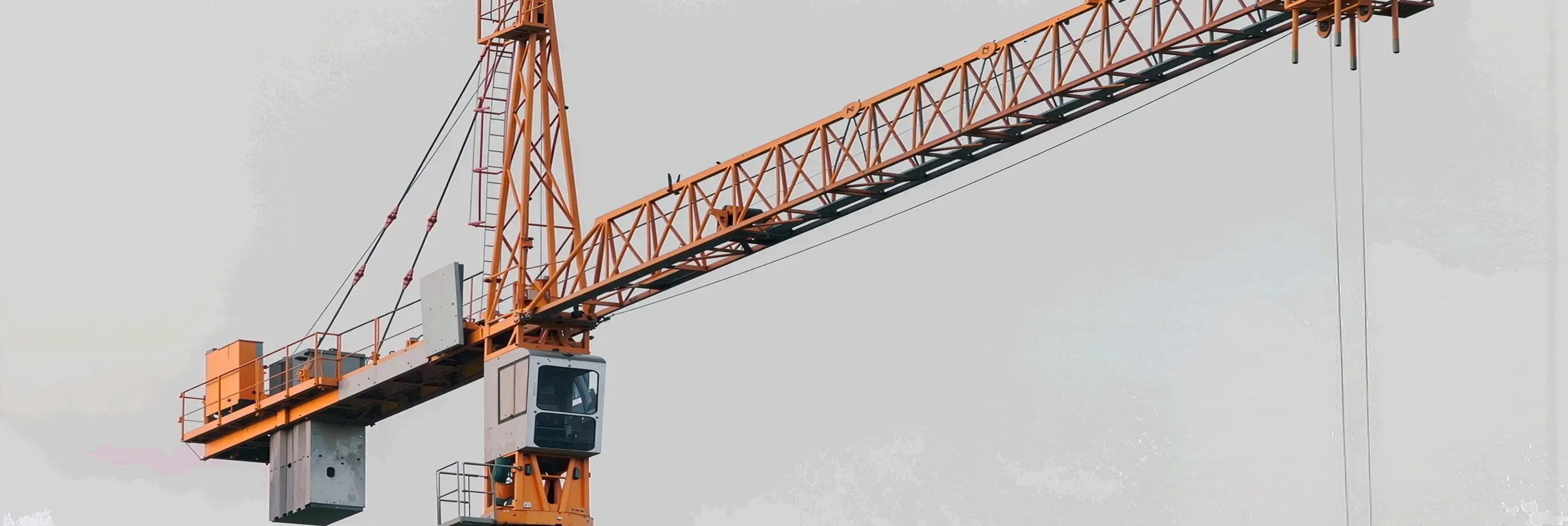
Construction bid solicitation: a practical guide for GCs
How general contractors plan bid packages, qualify subcontractors, manage ITBs and addenda, protect coverage, and receive proposals that can actually be leveled.
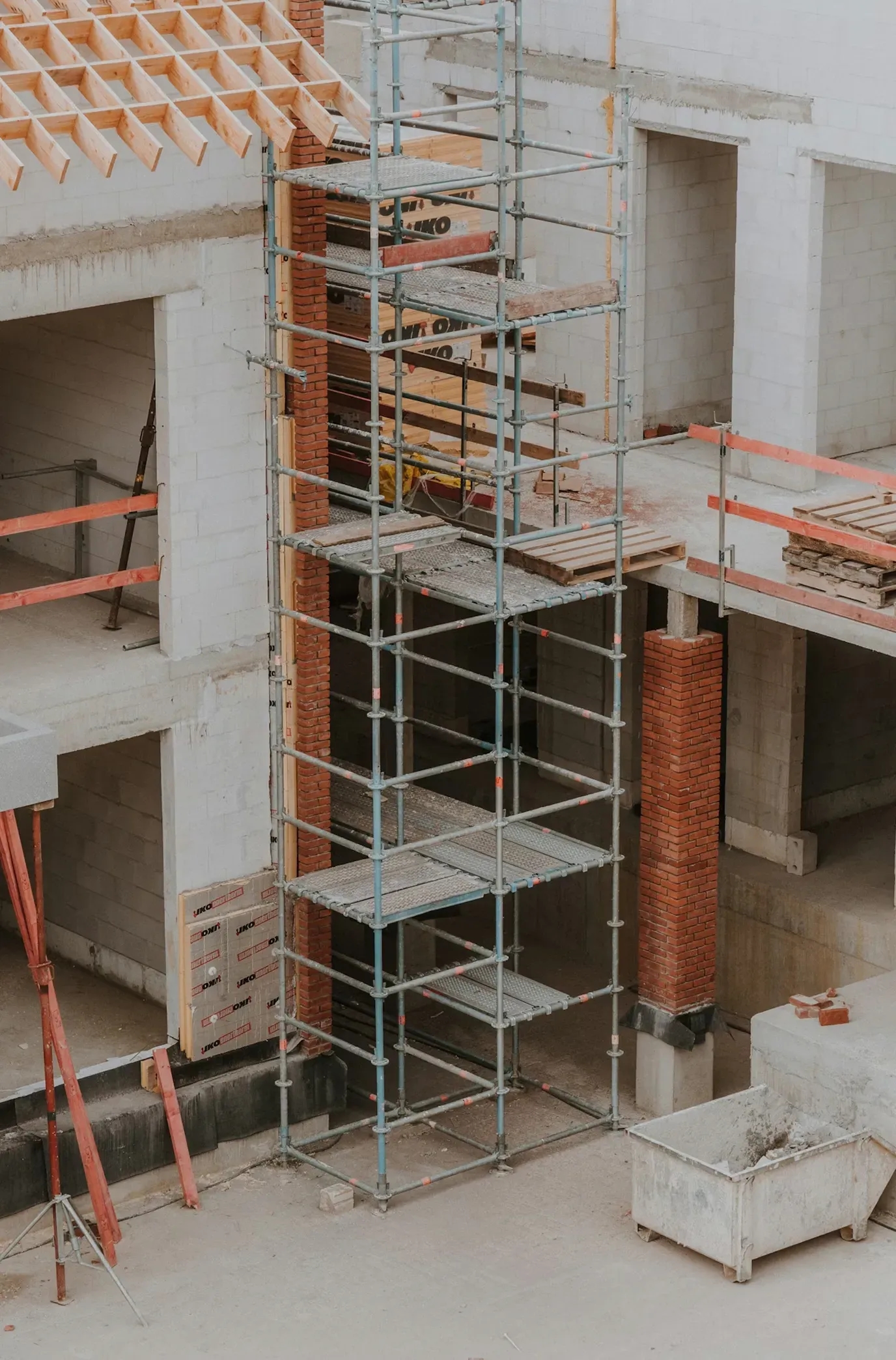
Why bid leveling eats estimator time
Manual quote comparison hides exclusions, scope gaps, and carry risk. Here is where the hours actually go before judgment even starts, and how to measure it on your own projects.
Piper removes manual review from the critical path and brings project data, company knowledge, and expert checks into every preconstruction decision and workflow
See Piper on your project
Bring a current or completed project and see how Piper saves review time, surfaces scope gaps, and applies your company's knowledge.